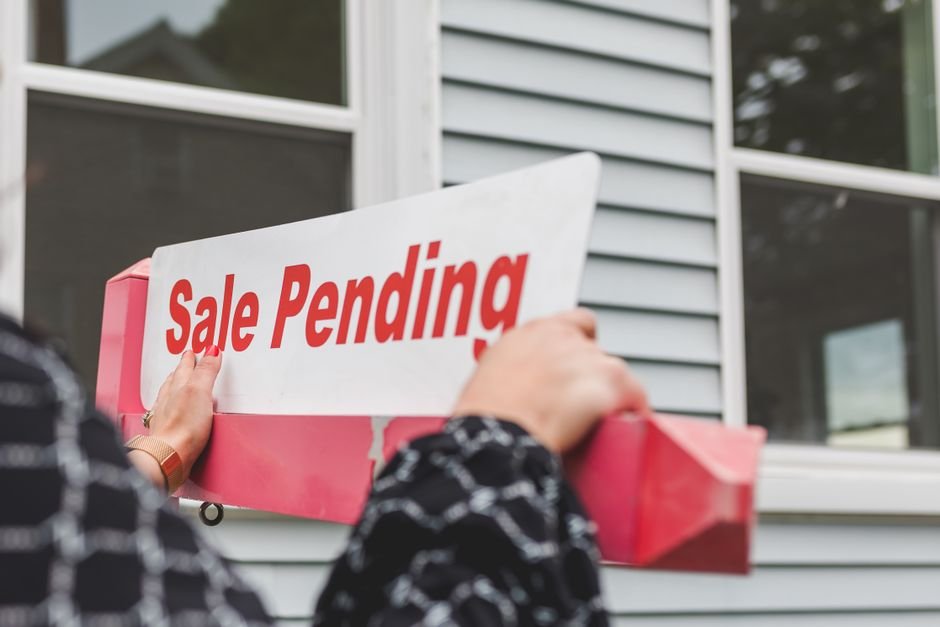
Existing home sales fell to a seasonally adjusted annual rate of 3.98 million in April, the National Association of Realtors reported Wednesday. That’s down 4.2% from March’s 4.15 million and below the 4.05 million consensus. It’s the lowest reading since last July.
The culprit is simple: mortgage rates refuse to budge. The 30-year fixed-rate mortgage averaged 7.18% last week, per Freddie Mac — up from 6.99% a month ago and stubbornly above 7% for the fourteenth consecutive week. The average contract rate on a 30-year conforming loan hit 7.32% in the latest MBA survey, which also showed purchase applications falling 3.1% week-over-week.
This is not a story about supply — it’s about affordability. The median existing-home price rose to $407,600, up 3.6% year-over-year. But with rates where they are, the monthly payment on that median home at current rates is roughly $2,860 — up from $1,770 when rates were at 3% in 2021. That’s a 61% increase in monthly housing cost. First-time buyers accounted for just 28% of April sales, near the lowest share on record.
“We’re in a demand lock,” said Lawrence Yun, NAR’s chief economist, in a statement. “Incomes are rising, jobs are plentiful, and home prices are stable. But the financing gap is the bottleneck. Existing homeowners with 3-4% mortgage rates are not listing their homes, and new buyers can’t afford the monthly payment at current rates. The market is working, but at very low velocity.”
Regionally, the South saw the steepest decline — 5.1% month-over-month — as that region had been the fastest-growing market during the pandemic era and is now seeing the most rate sensitivity. The Northeast fell 3.8%, the Midwest 2.9%, and the West 3.2%.
The inventory picture is both good and bad. Total housing inventory at the end of April was 1.21 million units, up 9% from March but still well below the pre-pandemic average of 1.8 million. Months of supply edged up to 3.6 months — the highest since January — but remains below the 6 months that historically signals a balanced market.
So here’s the thing: housing is in a deep freeze, but it’s not collapsing. Prices aren’t falling because there’s no forced selling — homeowners with locked-in low rates aren’t distressed. But volume is anemic, and that has downstream consequences for home improvement retailers, mortgage lenders, real estate brokers, and construction employment. The NAHB Housing Market Index has been trending down for three months straight.
The Fed minutes later today will be scrutinized for any mention of housing-specific concerns. Powell has been careful not to target home prices directly, but the transmission mechanism — higher rates crushing housing activity — is part of the broader economic slowdown the committee is monitoring. The problem for the Fed is that cutting rates to stimulate housing would risk re-igniting inflation. They’re stuck.
The homebuilders, at least, are having a different conversation. Lennar and DR Horton shares were flat to slightly higher on the day, as new construction continues to capture market share from the existing home market. Builders are offering rate buydowns that existing sellers can’t match. That bifurcation — stagnant existing market, active new construction — is the housing story of 2026.
For now, the existing home market is in suspended animation. The catalyst to break it free would be a sustained drop in mortgage rates below 6.5%. That requires Fed cuts. And Fed cuts require inflation to cooperate. No one is holding their breath.