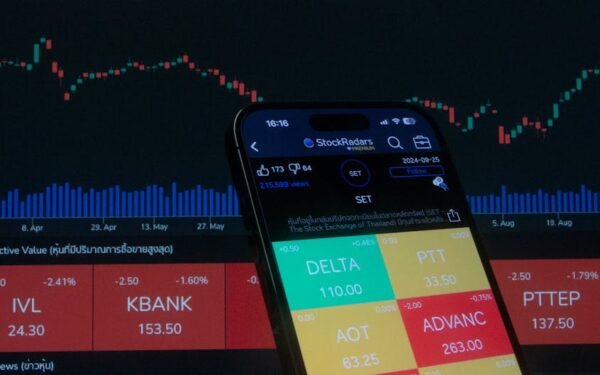
The S&P 500 dropped 2.59% last week while the Nasdaq cratered 4.68%. Tech stocks suffered a 7.90% rout, their worst week of 2026 as of Friday June 5. But here’s what makes that number misleading: healthcare rose 3.50%, real estate added 3.30%, utilities gained 2.90%, financials edged up 1.69%, and energy climbed 0.65% as of the same close. A market in genuine recession panic does not produce that sector scoreboard. This was a rotation, not a collapse.
The VIX surged from 15.40 to 21.51 as of Friday, its highest since the May tariff episode. The 10-year yield sat at 4.54%, up from 4.47% on Monday. WTI crude settled at $90.54. Gold closed at $4,365, down 2.47% on Friday in a move that should worry anyone calling this a pure risk-off trade — gold is supposed to rally when everything else falls. Bitcoin recovered to $62,805 from a Saturday low of $60,867, suggesting crypto traders treated the equity selloff as a dip-buying opportunity rather than a systemic signal. The data points in different directions, which is exactly what a narrative cross-current looks like.
Q1 GDP advanced at an annualized 1.8% as of the Bureau of Economic Analysis’s third estimate. April CPI ran at +2.7% year over year per the BLS. The Fed held rates at 4.50–4.75% in May. None of these prints scream recession. What they describe is an economy that is slowing from an above-trend pace to something closer to trend. The April core PCE reading of +2.8% is still above the Fed’s target, but it is moving in the right direction. A genuine growth scare would have taken every sector down together. That did not happen.
The risk is that this distinction gets erased next week. May CPI lands Thursday June 11 at 8:30 AM ET. Core CPI expectations are for a 0.2% month-over-month increase. A print at or above 0.3%, especially if services inflation remains sticky, would transform what looks like a positioning unwind into something closer to a macro regime shift. The Fed’s dot plot on Wednesday June 10 matters for the same reason: if the median 2026 cut drops from two to one, or to zero, every sector that relied on a loosening narrative gets re-priced simultaneously.
Call this what it is: a sector rotation from the most expensive part of the market into cheaper, more defensive parts of the market. That is consistent with an economy slowing but not collapsing. The soft-landing narrative is still intact as of Sunday June 7. But the margin for error is shrinking, and CPI next Thursday will determine whether the story holds or breaks.