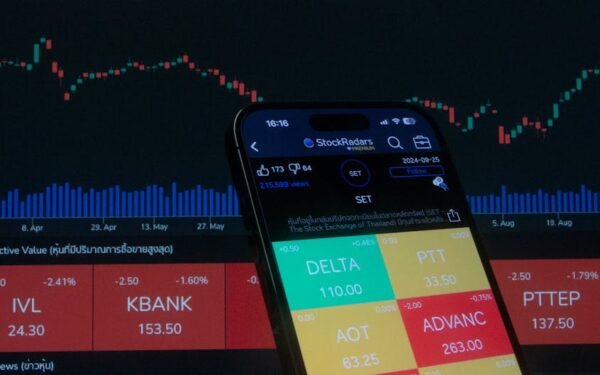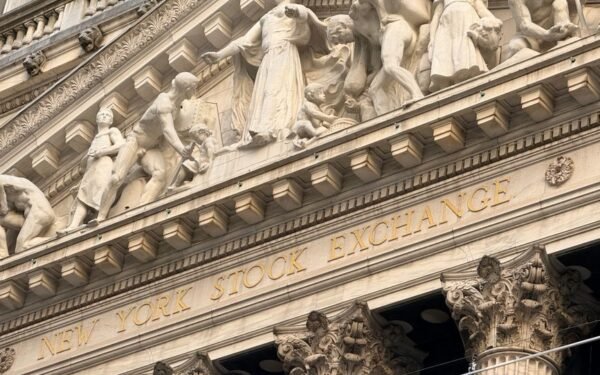
So here’s where we are: the Dow just closed at a record high. The Nasdaq just had its worst day of the year. That’s not a typo.
Friday was the lopsided climax of a week that exposed the sharpest internal divergence in the US stock market in years. The Dow Jones Industrial Average surged 875 points to a fresh all-time high above 43,000, powered by healthcare, financials, and defensive cyclicals. Meanwhile, the Nasdaq Composite plunged 4.2% — its worst single-session decline since September 2024 — as semiconductor stocks imploded following Broadcom’s disastrous guidance cut.
Let’s run the tape on the week. Monday was quiet. Tuesday saw the Dow notch a modest gain as energy stocks rallied on oil above $98. Wednesday brought a broader risk-off move as Middle East tensions flared, but the Dow held its ground. Then Friday hit — or as it will be remembered, the Great Divergence.
The May jobs report added to the confusion. Nonfarm payrolls came in at +172,000, hot enough to keep the Fed on hold but not so hot that it triggered a rate-hike scare. The 10-year yield oscillated between 4.05% and 4.12% before settling near 4.08%. For bonds, it was a shrug. For equities, it was a Rorschach test.
Here’s the bottom line: The market is pricing two very different futures. One is a soft landing where old-economy stocks thrive and the Dow grinds higher. The other is a growth scare where AI capex gets slashed and the Nasdaq re-rates lower. Both narratives held this week — and that can’t last. Next week, the CPI print on Thursday will be the tiebreaker. If core CPI comes in hot, it’s bad for both indices. If it prints cool, expect a Nasdaq bounce and the Dow to keep climbing. Either way, something’s gotta give.