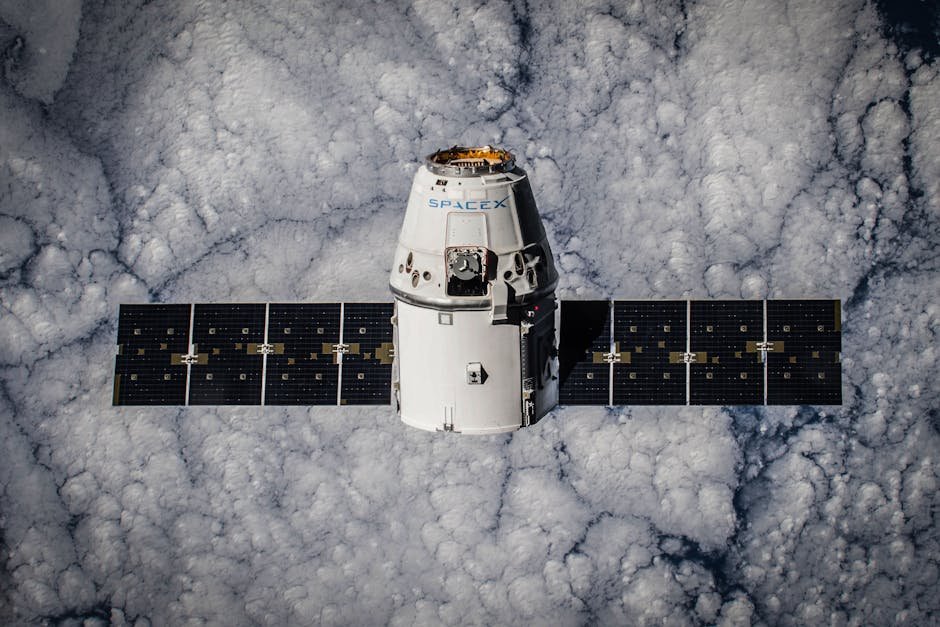
SpaceX is reportedly preparing for an initial public offering that would rank among the largest equity capital market events in U.S. history, with private-market transactions already valuing the company north of $310 billion. Sources familiar with the company’s internal planning told the Guardian on June 6 that the board has held preliminary discussions with underwriters about a listing as early as the first half of 2027, though SpaceX’s finance team has not yet filed confidential IPO paperwork with the SEC. The development marks a dramatic shift for a company whose founder Elon Musk had long insisted would remain private until a regular Mars cargo flight cadence was established.
A public SpaceX would inject roughly $50 billion to $80 billion of new equity liquidity into the aerospace and defense sector—capital that investment banks estimate would absorb between 4% and 7% of total U.S. equity fund flows in the listing year. The company’s Starlink satellite internet division now generates an estimated $12.8 billion in annual revenue across 4.8 million subscribers, producing positive free cash flow of approximately $3.7 billion that underwriters believe justifies a standalone valuation of $140 billion to $160 billion for the connectivity business alone. The launch services segment, by contrast, operates on thinner margins—roughly 18% at the operating level—driven by the roughly $67 million per-mission cost of Falcon 9 launches, each of which consumes 400 metric tons of liquid oxygen and kerosene propellant loaded aboard at the company’s Cape Canaveral hangars.
The Starshield defense contracting arm represents the most opaque but potentially most valuable piece of the puzzle. SpaceX has secured at least $4.2 billion in classified and unclassified U.S. government contracts since 2020, including a $1.8 billion National Reconnaissance Office agreement for satellite-based surveillance infrastructure that requires 24 dedicated launch windows per year from Vandenberg Space Force Base. Defense analysts estimate the Starshield franchise could triple revenue to roughly $7 billion by 2029 as the Space Force accelerates its procurement of proliferated low-earth-orbit architectures. Each Starshield satellite, built on the same bus as a Starlink V2 Mini, carries radiation-shielded sensor payloads that add roughly $1.8 million to the unit cost—bringing each bird to approximately $2.3 million versus the $500,000 cost of a standard Starlink.
Valuation implications for the broader sector are substantial. The four largest publicly traded defense primes—Lockheed Martin, RTX, Northrop Grumman, and General Dynamics—currently trade at an average enterprise value-to-revenue multiple of 2.1x. SpaceX, if listed, would likely command a multiple of 6x to 9x based on its revenue growth trajectory of roughly 45% year-over-year and its vertical integration advantage. That premium would pressure the primes to accelerate their own space segment investments or pursue acquisitions to close the gap. Lockheed Martin’s space segment revenue of $12.1 billion in fiscal 2025 would be dwarfed by a public SpaceX’s projected 2027 top line of roughly $28 billion, flipping the traditional pecking order in defense-space contracting.
The IPO would also force a reckoning in how the market prices space-based infrastructure. Iridium Communications, currently the only publicly traded pure-play LEO satellite operator with a $4.7 billion market cap, trades at 5.8x trailing revenue—a multiple that Starlink’s subscription economics would likely exceed by a factor of two or more given Starlink’s average revenue per user of $118 per month versus Iridium’s $52. Satellite manufacturing and launch company Rocket Lab USA has seen its shares rise 23% this year on the IPO speculation alone, as traders anticipate a rising tide for space-adjacent equities. The ARK Space Exploration & Innovation ETF has added $480 million in inflows since the Guardian report broke, much of it from retail order flow routed through Robinhood and Schwab.
The regulatory path presents nontrivial hurdles. The Committee on Foreign Investment in the United States would necessarily scrutinize any SpaceX IPO structure given the company’s classified government contracts and the sensitive nature of its launch manifest data. One possible structure—creating a publicly traded tracking stock for Starlink while keeping the launch and Starshield units private—has been modeled by Goldman Sachs but would require IRS rulings on the tax treatment of the separation. Musk’s control architecture, which involves a special class of supervoting shares that concentrate roughly 42% of voting power, would likely survive the IPO, a governance feature that index funds and ESG mandates may find difficult to accommodate.
The timing is opportunistic but not without risk. The U.S. equity market has absorbed $189 billion in IPOs and SPAC mergers over the trailing twelve months, and the Federal Reserve’s current interest rate holds at 4.25% has created a receptive window for large-cap growth offerings. However, SpaceX’s own Starship development program has consumed an estimated $6.2 billion to date across 34 test flights, four of which ended in vehicle destruction. The stainless-steel upper-stage tanks at the company’s Boca Chica facility—each 50 meters tall and 9 meters in diameter—are assembled in open-air high bays that experience Gulf Coast salt-fog corrosion requiring periodic weld repairs that add roughly $14 million per year to operating costs. The sheer operational complexity of a company that simultaneously operates the world’s largest satellite constellation, the most active commercial launch manifest, and the most ambitious rocket development program since Apollo means that public market investors would be buying exposure to engineering risk at a scale without modern precedent.
For the defense and space sectors, the signal is unambiguous: the capitalization wall between traditional aerospace primes and New Space has collapsed. A public SpaceX would command a market capitalization larger than Lockheed Martin and Northrop Grumman combined, reshaping index composition, sector rotation patterns, and the opportunity set for thematic funds that have long lacked a liquid large-cap space exposure. Underwriters are said to be targeting a valuation range of $280 billion to $350 billion in initial filings, a figure that would make a SpaceX IPO roughly three times larger than the Alibaba Group’s $25 billion 2014 debut—the current record-holder for the largest U.S. listing. The secondary-market implications for satellite spectrum rights, launch insurance premiums, and government procurement timelines will unfold over the next 18 to 24 months as the offering takes shape.